Welcome to the allergy community: a guide for the newly diagnosed.

The learning curve is steep — but you don't have to navigate it in the dark. Here is what you truly need to know to take control of your new diagnosis.

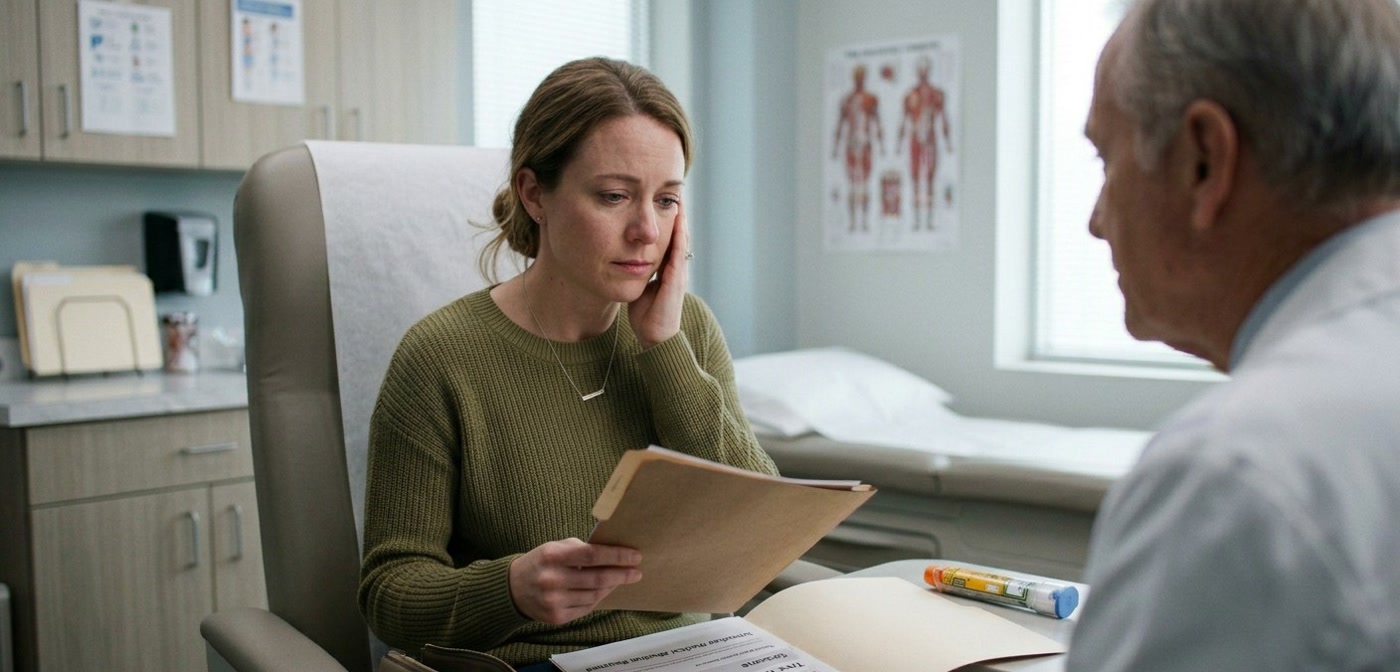
Worried woman receiving a food allergy diagnosis from her doctor in an exam room

Receiving a food allergy diagnosis as an adult or older teen can feel like the rug has just been pulled out from under your life. Your relationship with food, socializing, and safety shifts overnight.

While the learning curve is steep, you do not have to navigate this transition in the dark. Here is the roadmap that will help you go from overwhelmed to in control.

The newly diagnosed roadmap

01

Get smart about your specific profile

Your absolute first line of defense is deep, accurate education about your own body. Become an expert on your specific medical profile.

Know your boundaries

Understand exactly what you are allergic to — and learn about "cross-reactive" foods: related items or hidden ingredients that share a similar biological structure and might trigger a reaction.

Recognize the signs

An allergic reaction doesn't always look like a dramatic scene from a movie. Learn exactly what a reaction looks and feels like for you, whether it starts as a scratchy throat, hives, or sudden stomach distress.

Build an airtight action plan

Hope is not a strategy. Work with your allergist to establish a definitive, step-by-step emergency action plan. Know exactly when and how to use your epinephrine auto-injector — and keep it on you at all times.

02

Navigate the digital wild west of information

When you leave the doctor's office, your immediate instinct will be to open Google. Remember this golden rule: the internet is both your best friend and your worst enemy.

The good

There is incredible, life-saving information out there from reputable medical professionals, peer-reviewed journals, and established non-profits like FARE or the Celiac Disease Foundation. Stick to verified entities for medical logic.

The bad

The internet is also packed with terrifying misinformation, unscientific "cures," and pseudoscientific nonsense from random forums. Guard your mental health by filtering out the noise and trusting verified medical sources.

03

Find comfort in your new community

The diagnosis can feel incredibly isolating at first, but you are far from alone. There is a massive, highly active, and deeply empathetic global community of allergy families and individuals waiting to welcome you.

Where to look

Online support groups, dedicated subreddits, and local in-person meetups are filled with people who have already solved the exact logistical problems you are currently panicking about.

Why it matters

This community is your ultimate crowdsourced asset for finding safe local bakeries, product recommendations, and practical daily hacks that no clinician will hand you on a printout.

04

Prep for the social friction

Here is a tough truth every allergy patient eventually faces: explaining your condition to family, friends, and restaurant staff is going to be a constant struggle, and not everyone will understand or be supportive.

What to expect

You will encounter relatives who think you're just being "trendy" or picky, friends who forget to check labels before hosting, and servers who look annoyed by your questions.

How to handle it

Developing a thick skin and a calm, firm script to advocate for your safety is a skill you will hone over time. Your safety matters more than someone else's temporary social discomfort. If you're already worrying about how to have these conversations without causing an argument, read our practical guide on how to explain your food allergies to family and friends without the drama.

05

Embrace your "new normal"

There is no sugarcoating it — dining out, holiday gatherings, business trips, and vacations will all look different now. They require a baseline of pre-planning and vigilance you've never had to exercise before.

What changes

Spontaneous dinners turn into pre-menu audits. Traveling involves packing shelf-stable emergency backup snacks. The mental load is real.

Different doesn't mean impossible

With the right routine and the right tools, you will quickly find your rhythm, and safe dining will become second nature.

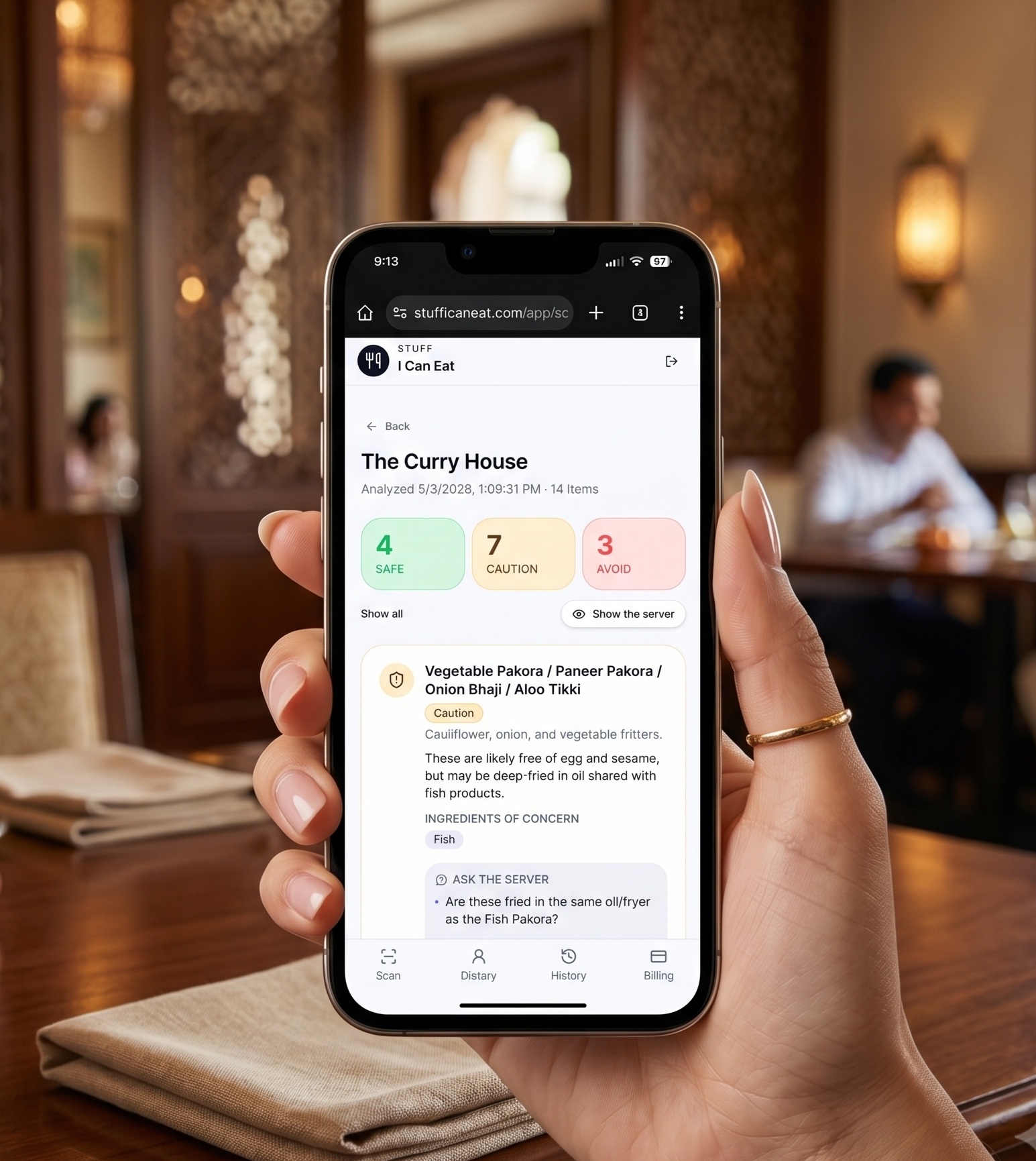
Newly diagnosed woman using Stuff I Can Eat on her phone to check a restaurant menu

We built the tool we wish we had on day one.

Adjusting to a new food allergy diagnosis is overwhelming enough without manually memorizing every ingredient on a restaurant menu. Lock your allergens into your personal profile, paste any menu link, and instantly see a clean, color-coded breakdown of what is safe to order.