
Food allergies on vacation: the safe travel dining guide.
Take the anxiety out of your next family vacation. Scan unfamiliar restaurant menus instantly for allergens and travel safely without the guesswork.
Traveling with severe food allergies doesn't have to mean traveling with anxiety. Here is your step-by-step blueprint for a safe flight.
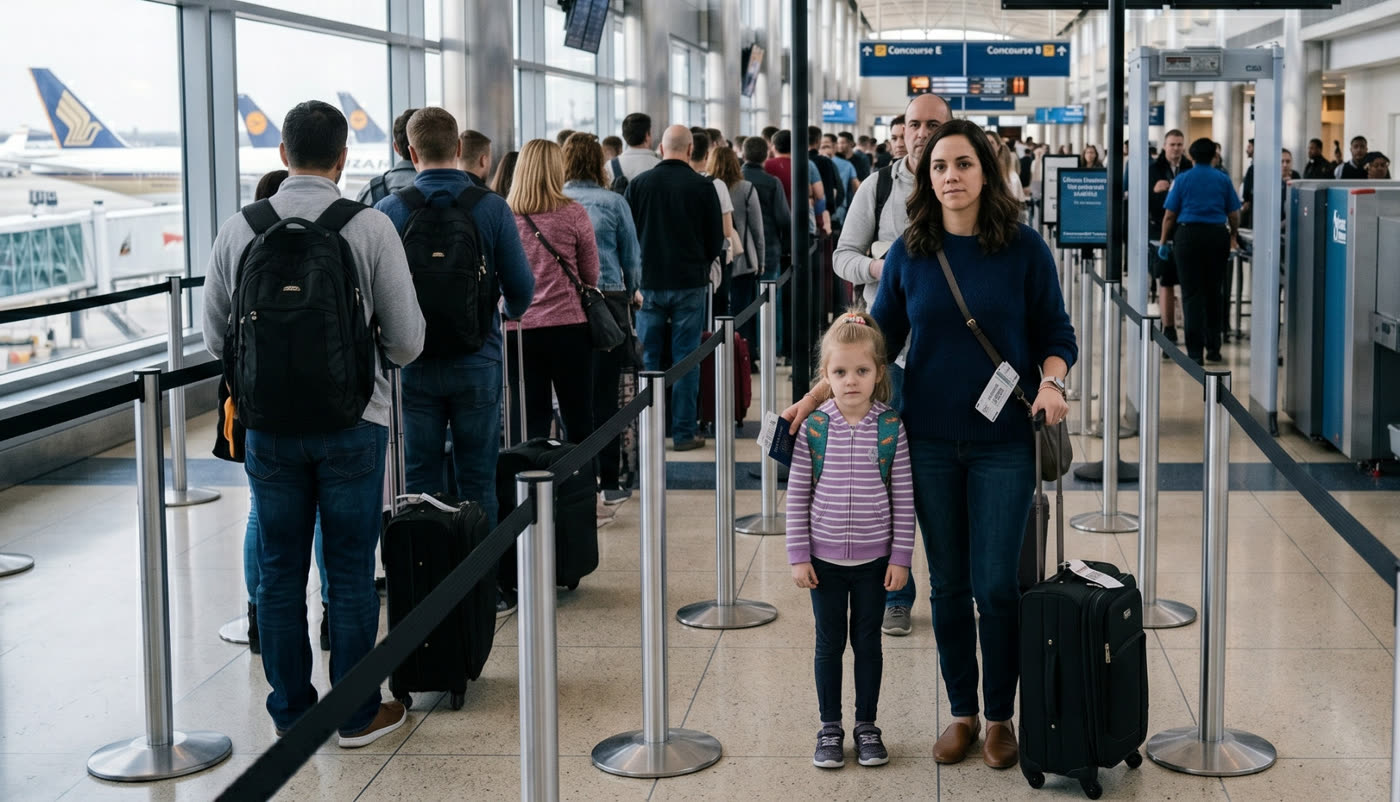
For anyone managing severe food allergies, leaving the safety of your own kitchen is a massive hurdle. But stepping into an airport terminal? That can feel like entering a high-stakes obstacle course.
Between long security lines, unpredictable flight delays, and the enclosed space of an airplane cabin, the anxiety is entirely valid. The good news is that with the right preparation and a clear understanding of federal guidelines, you can control your environment and protect your health from the departure gate to your destination.
Here is exactly how to navigate the airport, breeze through security, and ensure a safe flight — a natural extension of any vacation allergy checklist you've already put together.
The Transportation Security Administration (TSA) enforces strict limits on liquids, but they make explicit, legally protected exceptions for medical necessities. You do not have to leave your life-saving medication behind.
You are legally permitted to bring epinephrine auto-injectors (like EpiPens) and emergency antihistamines through airport security checkpoints.
The rule: Epinephrine auto-injectors are allowed in unlimited quantities in your carry-on baggage. They do not need to fit into a quart-sized plastic bag.
Best practice: Keep your auto-injectors in their original pharmacy packaging with the prescription label matching the passenger's legal name. While TSA does not strictly require the prescription label, having it virtually eliminates checkpoint friction. Always carry them in your carry-on bag — never check them, as cargo holds experience extreme temperature fluctuations that can degrade the medication.
If your allergy requires you to bring specialized liquid nutrition, or if you need to keep safe meals cold, TSA infrastructure accommodates this.
The rule: Liquid or gel food items exceeding 3.4 ounces are permitted through the checkpoint if they are deemed medically necessary. Additionally, ice packs, freezer packs, and gel packs are fully allowed in your carry-on to keep your medically necessary food cold.
The catch: If these ice packs are partially melted, slushy, or liquid at the time of screening, they are still allowed, but they will be subject to the same additional screening as other medically necessary liquids.
Best practice: Declare these items to the TSA officers before screening begins. Separate your medical liquids and ice packs from your regular luggage so they can be inspected efficiently.
Once you clear security, you are often faced with a multi-hour wait in a crowded terminal. Much like finding allergy-friendly restaurants in a new city, airport dining presents a unique challenge: fast-turnover kitchens, high staff rotation, and cross-contamination risks.
To minimize risk in the terminal:
Always travel with enough non-perishable, shelf-stable safe snacks to last you an extra 24 hours in case of a severe flight delay or cancellation. Never rely entirely on terminal kitchens.
If you must order food at an airport chain, ask to speak directly to a manager. Airport environments are frantic, and front-line cashiers rarely have a direct line of sight into back-of-house cross-contamination protocols.
The airplane cabin is a shared ecosystem, meaning your safety plan for flying with food allergies requires a few proactive steps before the wheels leave the tarmac.
Under federal airline accessibility policies, individuals with severe food allergies can request a brief pre-boarding window to wipe down their seating area.
Aircraft turnarounds are fast, and tray tables are rarely deep-cleaned between flights. Use an allergy-safe, sanitizing wipe to thoroughly clean the armrests, tray table, seatbelt buckle, and the window shade. Wiping removes physical protein residue from the previous passenger's snacks, mitigating contact-allergy risks.
Let the lead flight attendant know about your severe allergy upon boarding. While airlines cannot guarantee a "peanut-free bubble," many crews will gracefully agree to refrain from serving loose nut snacks or will make an announcement asking passengers in your immediate rows to save nut products for after the flight.
Surviving the airport logistics is only half the battle. Once you arrive at your destination city, you shouldn't have to spend your time managing food allergies on vacation playing food detective or digging through endless PDF menus on your phone just to find dinner.
With Stuff I Can Eat, your personalized dietary profile goes wherever you do. Whether you are grabbing a quick bite at a national chain near your hotel or navigating a busy post-flight family meal, you can instantly filter the top 100 US restaurant chains by your exact safety parameters in seconds.
More practical guides to help you eat safely and confidently.
Take the anxiety out of your next family vacation. Scan unfamiliar restaurant menus instantly for allergens and travel safely without the guesswork.
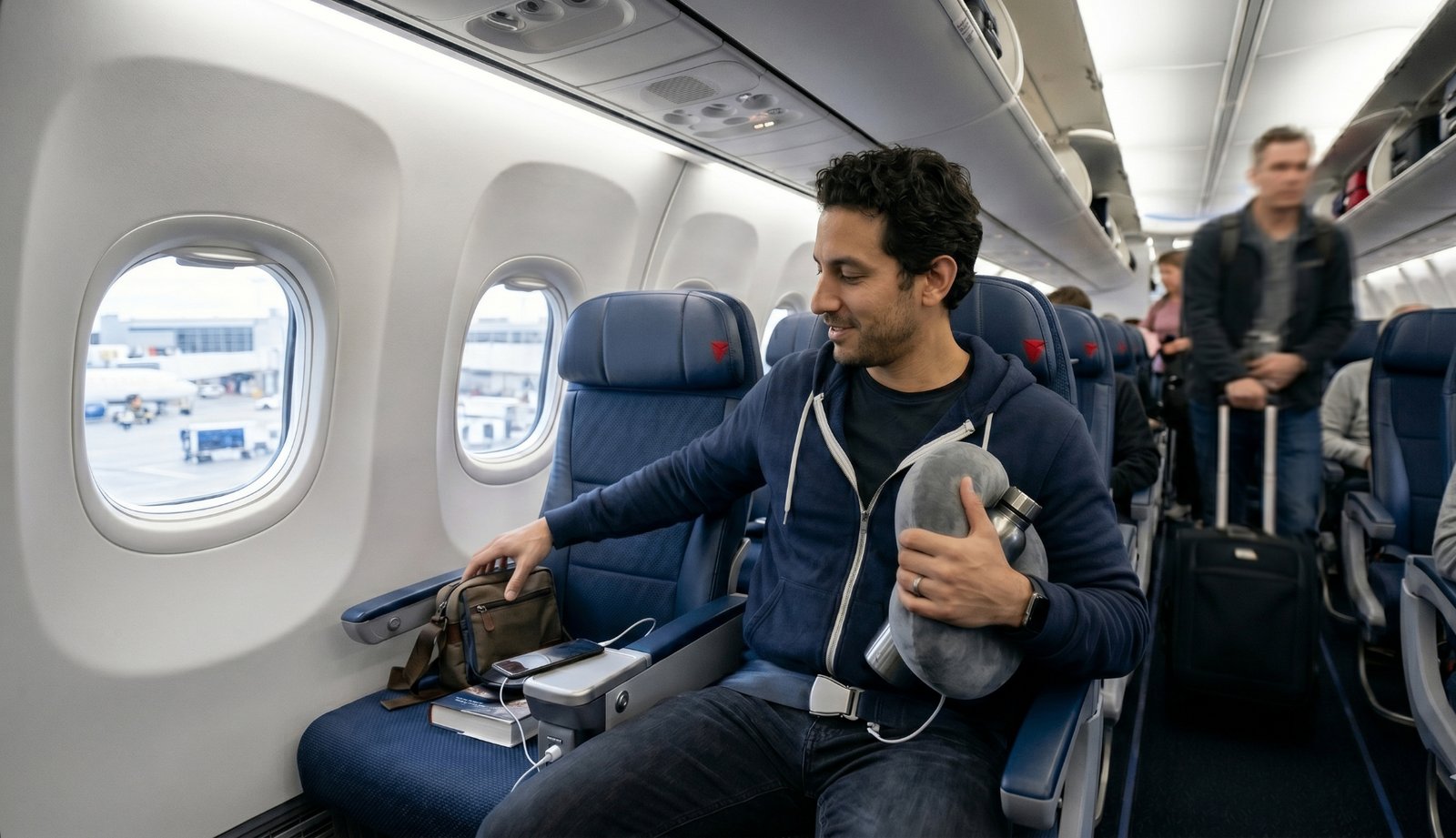
From pre-boarding strategies to the essential wipe-down ritual, here's how to navigate commercial flights with confidence and zero anxiety.
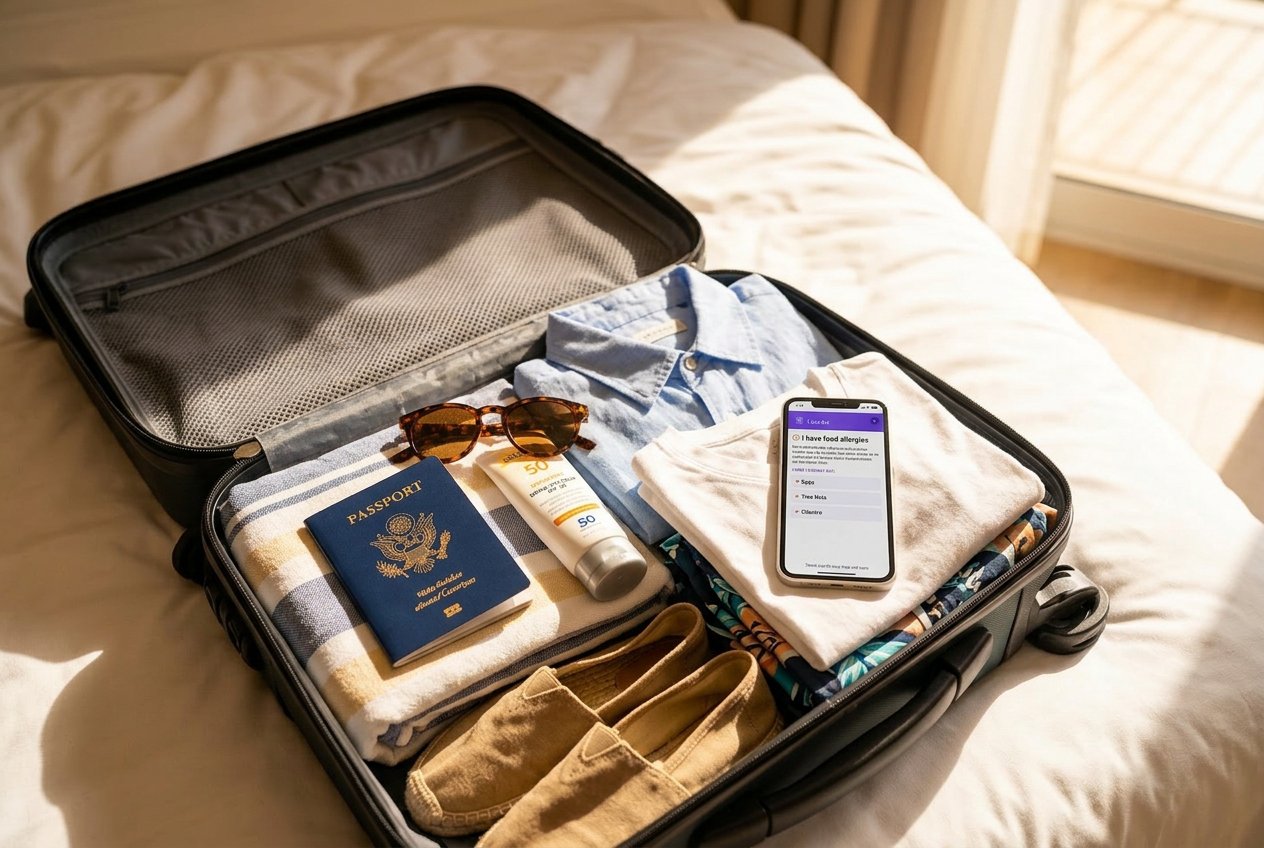
Four common travel hurdles for food allergy families — and exactly how to overcome each one.