
How to find allergy-friendly restaurants in an unfamiliar city.
Five proven strategies for mapping out a safe culinary network in any new city — from word-of-mouth networks to instant menu scanning.
Which peanut-free Chinese dishes are safest, which to avoid, and how to order takeout without guessing.
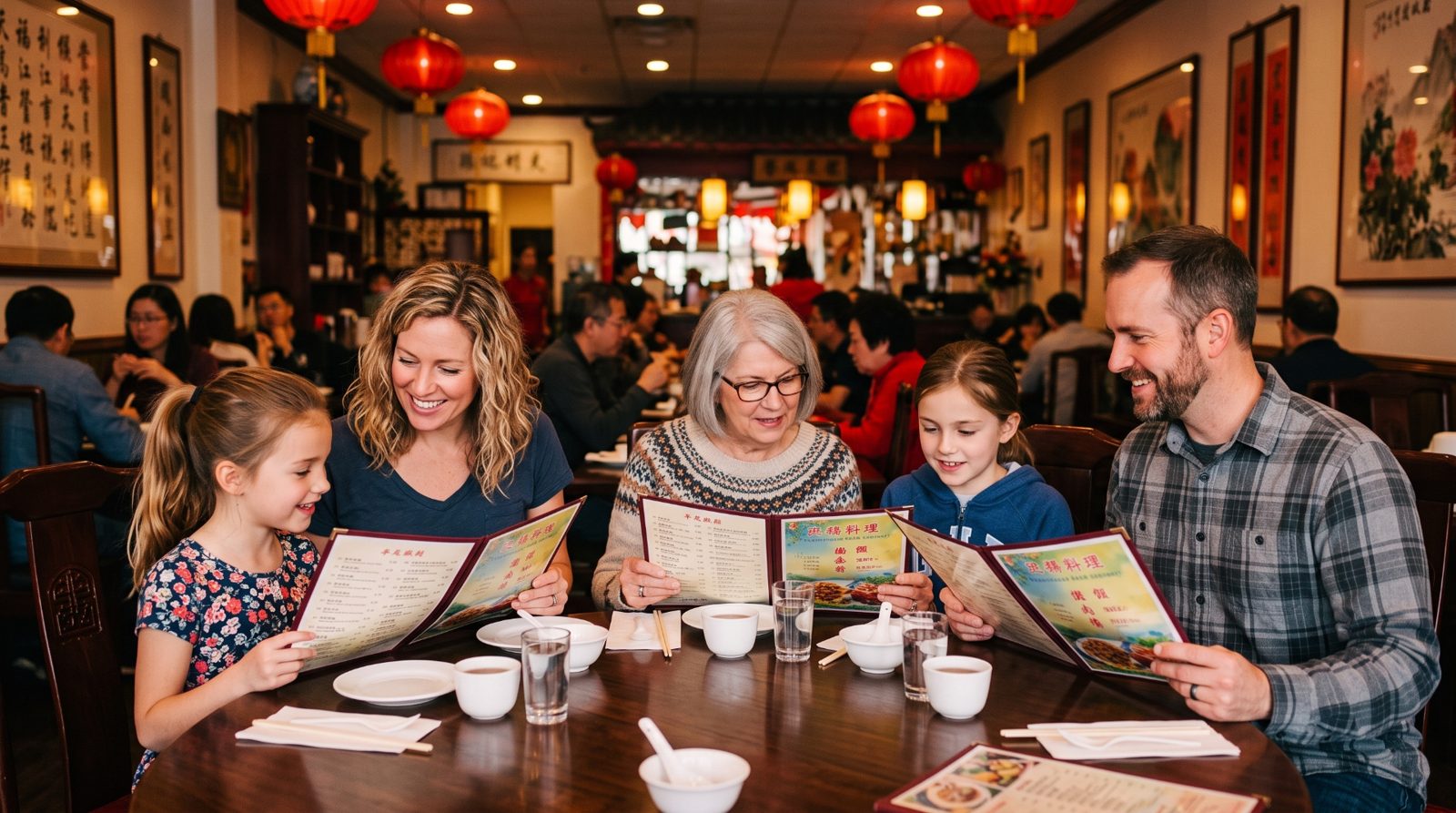
For families and independent adults living with a severe peanut allergy, ordering Chinese takeout or finding a safe restaurant to dine at an authentic Asian spot is often labeled the ultimate culinary "no-go." The fear is entirely understandable — traditional Chinese cuisine frequently features whole peanuts, crushed garnishes, and complex sauces where peanut derivatives hide in plain sight.
But does a peanut allergy mean you have to ban Chinese food from your lifestyle forever?
The short answer is: it depends entirely on your level of preparation and the tools you use to communicate. While the cross-contamination risks in standard professional kitchens are incredibly high, understanding exactly where peanuts hide and knowing how to advocate for your safety can transform a high-anxiety dining experience into a confident, stress-free meal.
The primary reason Chinese restaurants pose a unique challenge for peanut allergy families isn't just the visible peanuts sprinkled on top of a dish — it is the widespread use of peanuts as a foundational element of flavor, texture, and cooking technique.
To safely navigate a menu, you need to know exactly what happens behind the kitchen doors.
While menus vary by region (such as Sichuan, Hunan, or Cantonese), several staple dishes are almost universally high-risk for someone with a peanut allergy:
⚠️ A note on cooking oils: Authentic Chinese cooking frequently uses unrefined, cold-pressed peanut oil for its high smoke point and distinct nutty flavor. Unlike highly refined peanut oil (which many allergists consider safe because the allergenic proteins are stripped during processing), unrefined gourmet peanut oil retains its active proteins and can trigger severe anaphylaxis. Always assume a kitchen's frying oil is unrefined until proven otherwise.
In a high-volume, fast-paced restaurant kitchen, cross-contamination (or cross-contact) is often a bigger threat than the menu itself. Even if you order a seemingly safe dish like steamed broccoli and beef, it can easily become contaminated through traditional cooking setups:
Authentic Chinese cooking relies on the "breath of the wok" (wok hei). To maintain service speed, a chef will frequently cook a peanut-heavy dish like Kung Pao Chicken, give the wok a lightning-fast rinse with hot water and a bamboo brush, and immediately toss the next guest's nut-free stir-fry into the exact same pan. This quick rinse does not strip away microscopic allergen proteins, transferring them directly to your meal.
If a restaurant deep-fries peanut-stuffed wontons or appetizers in a large, communal fryer, the entire batch of frying oil becomes contaminated. Ordering crispy egg rolls or fried rice cooked in that same oil carries an incredibly high risk of exposure.
Crushed peanuts are frequently kept in open containers right next to standard garnishes like green onions and sesame seeds. Busy line cooks reaching back and forth during a chaotic dinner rush can easily drop stray peanut fragments into completely unrelated ingredient bins.
No dish is guaranteed safe in a shared kitchen, but some are far lower risk than others. Use this list to shortlist what to order, then confirm every item with the questions below.
✅ Usually lower risk (still ask first)
🚫 Avoid with a peanut allergy
Regional cooking style matters as much as the individual dish. The guide below breaks down what to expect in Sichuan and Cantonese kitchens, then scan the menu with Stuff I Can Eat before you order to flag every item that mentions peanuts, peanut oil, or satay.
The regional style of a Chinese restaurant often predicts peanut exposure better than any single dish. Sichuan and Cantonese kitchens operate with very different ingredient traditions, so it helps to know what each one typically brings to the table.
Sichuan cooking leans heavily on peanuts for texture and richness. Kung Pao dishes, Dan Dan noodles, and cold sesame noodles are core menu items here, and many brown sauces are thickened with peanut paste. Mala chili oils and hot pot dipping bowls frequently contain crushed peanuts or peanut oil. Even "simple" dishes can pick up residue from shared woks and prep boards.
Relatively safer Sichuan orders (always confirm first): plain mapo tofu made without peanut garnish, steamed fish with ginger and scallions, steamed white rice, and stir-fried green vegetables prepared in a cleaned wok with a non-peanut oil.
Cantonese food tends to be lighter and less reliant on peanuts than Sichuan or Hunan styles. Steamed dishes, congee, and simple stir-fries are common. The main watch-outs are dim sum peanut sauces (often served with rice noodle rolls), spring roll and wonton fillings, and dessert soups that use peanuts for texture.
Relatively safer Cantonese orders (always confirm first): steamed dumplings with soy-vinegar dip, congee with plain protein, beef chow mein cooked in a peanut-free oil, steamed fish with ginger and scallions, and gai lan with garlic sauce.
Remember: Regional style is a clue, not a guarantee. A Cantonese kitchen that also serves Sichuan-style Kung Pao Chicken shares the same cross-contact risks as a fully Sichuan restaurant. Always ask about shared woks, fryers, and prep stations before ordering.
Never cross your fingers and guess. Bringing a chef card can help, but you should still speak to your server, a floor manager, or the chef directly and ask explicit questions. Because language barriers or differing definitions of "nuts" can occur, bypass vague questions like "Is this nut-free?" and use this specific checklist instead:
"What type of oil do you use in your woks and deep fryers?"
What to listen for: You want to hear a definitive "soybean oil," "canola oil," or "vegetable oil." If they say "peanut oil," ask if it is highly refined or unrefined/gourmet. If they aren't sure, skip all fried items.
"Are there any dishes on your menu that use peanut butter, peanut paste, or crushed peanuts as a thickener in the sauces?"
What to listen for: Chefs frequently use peanut paste secretly in brown sauces, curry bases, and marinades to deepen flavor without listing it as a main ingredient.
"Can the chef use a completely clean, sanitized wok and fresh utensils to cook my meal separately?"
What to listen for: A restaurant that understands allergies will confidently say yes and outline their protocol (washing the wok with soap and water, using fresh oil, and changing their gloves). If the server hesitates or looks confused, it is safer to politely walk away.
If dining at a traditional takeout spot feels too risky for your comfort level, you do not have to give up these flavor profiles entirely.
You shouldn't have to cross your fingers and hope nothing was lost in translation between your server and the kitchen crowd. Managing a life-threatening peanut allergy requires absolute precision, whether you are ordering local takeout or traveling abroad.
Let Stuff I Can Eat automate your restaurant safety checks. With your free account, you can take control of your dining safety in seconds:
Pick what you avoid, add a menu, and see which dishes are safe, which to ask about, and which to skip.
What do you need to avoid?
One free check per visitor. No email needed to see your first results.
More practical guides to help you eat safely and confidently.
Five proven strategies for mapping out a safe culinary network in any new city — from word-of-mouth networks to instant menu scanning.

What is a food allergy card? Learn how customized chef cards and digital allergy translation cards protect you from cross-contact when dining out.
Instant access to official allergen information, dietary charts, and ingredient menus for the top 100 US restaurant chains — alphabetized and filterable by category.