
How to find allergy-friendly restaurants in an unfamiliar city.
Five proven strategies for mapping out a safe culinary network in any new city — from word-of-mouth networks to instant menu scanning.
How to pick safe venues, time the allergy conversation, and handle intimacy without letting anxiety run the date.
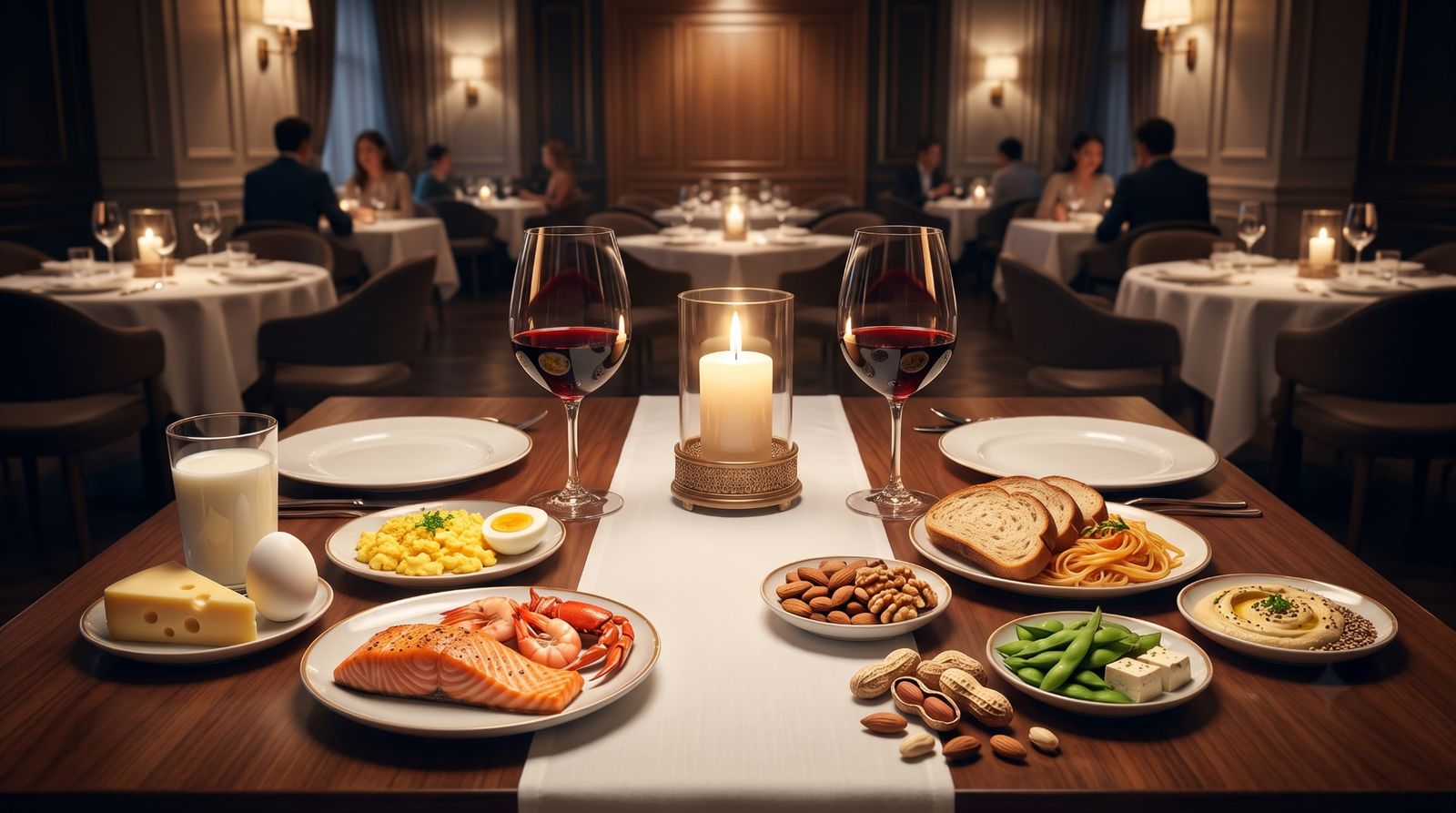
Dating is already filled with high-pressure moments — what to wear, what to talk about, and whether there's a genuine spark. But when you live with severe food allergies or Celiac disease, dating introduces an extra layer of medical anxiety.
Because food is the primary currency of romance — from casual first-date drinks (see our guide to navigating food allergies and alcohol) and trendy dinners to cooking together at home — managing your safety can feel like an awkward hurdle. How do you explain cross-contact without sounding "high maintenance"? Is kissing after a date safe?
This guide breaks down practical strategies for navigating venue selection, intimate moments, and open communication so you can date with total confidence.
One of the biggest psychological hurdles in dating is timing the conversation. Disclose too early, and you worry about making a medical condition your entire identity. Wait too long, and you risk an emergency or an uncomfortable scenario at the table.
Mention your allergies before you meet in person, specifically when deciding on the venue — a chef card can also make ordering together easier once you're seated. Framing it around logistics keeps the conversation casual, direct, and zero-stress:
"I'm really looking forward to getting together on Friday! Just a heads-up: I have a severe peanut allergy, so I usually like to pick spots where I know the kitchen is safe. How about [Restaurant Name]?"
A partner's initial reaction to your food allergies tells you a lot about their empathy. Someone worth dating will respond with supportive curiosity, not annoyance. If a date dismisses your condition as picky eating or complains about changing venues, they've saved you time upfront.
Spontaneity is fun, but safety requires preparation. Rather than waiting for your date to suggest a spot that might be high-risk (like a shared-fryer burger joint or a heavy pesto-and-bakery bistro), take control of the planning by finding allergy-friendly restaurants ahead of time.
For individuals with anaphylactic allergies, kissing someone who recently consumed an allergen presents a real medical risk. Studies show that allergenic proteins (especially from peanuts, tree nuts, and dairy) can linger in saliva for hours after eating, even after brushing teeth or chewing gum.
Navigating this doesn't have to be mood-killing — it just requires clear, lighthearted boundaries.
As a relationship progresses, food becomes a way people show affection. Managing home-cooked meals and surprise treats requires setting kind, firm boundaries early on.
If a new partner offers to cook you dinner at home, suggest making it a joint activity. Cooking together allows you to oversee ingredient selection, ensure safe cookware is used, and teach them about cross-contact in a fun, hands-on environment.
If your date surprises you with chocolates or baked goods that aren't verified safe, express gratitude for the thought while maintaining safety:
"Thank you so much, that is so thoughtful! Because my allergy is so severe, I only eat baked goods from verified allergen-free kitchens. But I really appreciate you thinking of me!"
Managing food safety shouldn't hold you back from finding romance.
Stuff I Can Eat gives you the tools you need to handle social dining effortlessly.
Paste or upload any restaurant menu before your date to instantly flag safe choices and spot hidden allergen risks.
Communicate your boundaries clearly to servers without making a scene at the table using a sleek, full-screen digital allergy card on your phone.
Shopping together or making dinner at home? Use the label scanner to instantly verify packaged ingredients and snacks in seconds.
Stop letting food anxiety dictate your love life. Focus on the spark — we'll help handle the plate.
Pick what you avoid, add a menu, and see which dishes are safe, which to ask about, and which to skip.
What do you need to avoid?
One free check per visitor. No email needed to see your first results.
More practical guides to help you eat safely and confidently.
Five proven strategies for mapping out a safe culinary network in any new city — from word-of-mouth networks to instant menu scanning.

What is a food allergy card? Learn how customized chef cards and digital allergy translation cards protect you from cross-contact when dining out.
Instant access to official allergen information, dietary charts, and ingredient menus for the top 100 US restaurant chains — alphabetized and filterable by category.