What does 'may contain' mean? Food allergy label guide.
"May contain" warnings are voluntary — and no warning doesn't mean a food is safe. What these labels really mean, and when to walk away.
A complete guide to allergen labeling requirements in the US, Canada, UK, and Australia.

If you manage food allergies, celiac disease, or a severe food intolerance, you know that reading food labels is a high-stakes guessing game. But if you are buying imported goods, traveling abroad, or trying to understand why a product from Canada looks different than one from the United States, that game gets a lot harder.
While food safety authorities globally share the same goal — keeping consumers safe — they have fundamentally different rules about which ingredients require warning labels and how those warnings must be formatted. Even within a single country, it helps to first understand what a precautionary "may contain" warning is actually telling you.
Here is a definitive, side-by-side breakdown of the allergen labeling requirements for the United States, Canada, the United Kingdom, and Australia.
The following table tracks which specific ingredients must be legally declared as priority allergens across all four jurisdictions.
| Food / Substance | US "Big 9" | Canada 11 Priority | UK 14 Allergens | Australia PEAL |
|---|---|---|---|---|
Peanuts | ||||
Tree Nuts | ||||
Milk | ||||
Eggs | ||||
Soy | ||||
Wheat | ||||
Fish | ||||
Crustaceans (e.g., shrimp, crab) | ||||
Sesame | ||||
Mollusks (e.g., clams, squid) | ||||
Mustard | ||||
Sulphites / Sulfur Dioxide | ||||
Gluten / Other Cereals (barley, rye, oats) | ||||
Celery | ||||
Lupin (a legume-based flour) |
Important label nuances:
It isn't just what is on the label that changes — it is how the law requires companies to print it. Missing these regional design quirks can easily lead to a missed ingredient.
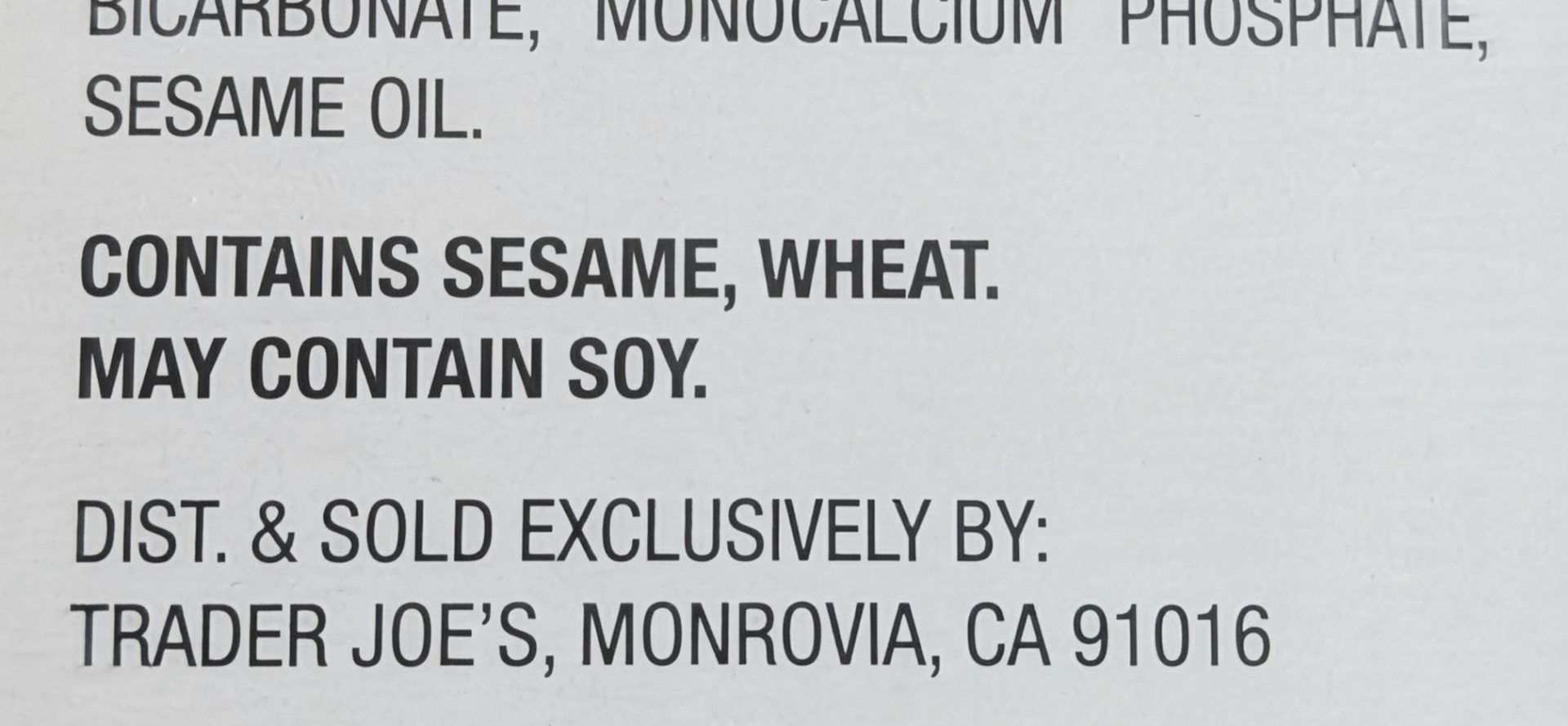
The US Food and Drug Administration (FDA) gives manufacturers two options. They can either name the allergen in plain English directly within the ingredients list — for example, Casein (Milk) — or they can put a separate statement at the very end of the list that explicitly reads: "Contains Milk, Wheat." The law applies strictly to prepackaged foods, meaning open restaurant menus are not bound by these specific rules.
Health Canada and the CFIA enforce strict plain-language laws. Manufacturers are legally barred from using obscure scientific terms without naming the source ingredient (e.g., Lecithin (Soy)). Furthermore, because Canada is officially bilingual, all allergen declarations must be printed identically in both English and French on the package.
In the UK, allergens cannot just hide in a standard text block. The Food Standards Agency requires them to be visually distinct within the main ingredient list itself using bold font, italics, or high-contrast colors. Additionally, under a piece of legislation known as Natasha's Law, this strict labeling applies to foods packaged on-site for immediate sale, such as a freshly made sandwich grabbed from a local cafe display case.
Australia features some of the most rigorous labeling laws in the world. Their updated PEAL regulations mandate Dual Bolding. The specific allergen must be bolded inside the ingredients list and duplicated in a separate, bolded "Contains" summary box, similar to how processed meats like hot dogs must disclose their fillers under US rules.
Furthermore, generic blanket terms are banned in Australia. While a US or Canadian label might safely group ingredients under "Tree Nuts" or "Fish," Australian manufacturers are legally required to call out the exact species, such as Almond or Barramundi. They also require separate declarations for both Wheat (as an allergen) and Gluten (for celiac safety) if a wheat derivative is present.
When eating or buying food manufactured outside of your home country, never assume a clean label means a safe food. An American traveling to the UK might be surprised to find celery and lupin flagged on a menu, while a Canadian visiting the US must be extra cautious checking for hidden mustard or mollusks, which American labels are not required to highlight. Always read the full ingredient list line-by-line, and when in doubt, contact the manufacturer directly before taking a bite. If you are unsure whether a reaction is a true allergy or something else, our food allergy vs. food intolerance breakdown and food allergy FAQ are good starting points.
You shouldn't need a law degree to buy a safe snack at a Tesco in London or a Woolworths in Sydney. Stuff I Can Eat instantly translates every ingredient list against your personal allergen profile — no matter which country's rules the package follows.
More practical guides to help you eat safely and confidently.
"May contain" warnings are voluntary — and no warning doesn't mean a food is safe. What these labels really mean, and when to walk away.

Scan a barcode or snap an ingredient label and see instantly whether a packaged food is safe for your allergies — a step-by-step walkthrough.

A free printable list of every deceptive ingredient name that hides gluten — wheat aliases, barley malt traps, red-flag additives, and safe lookalikes.