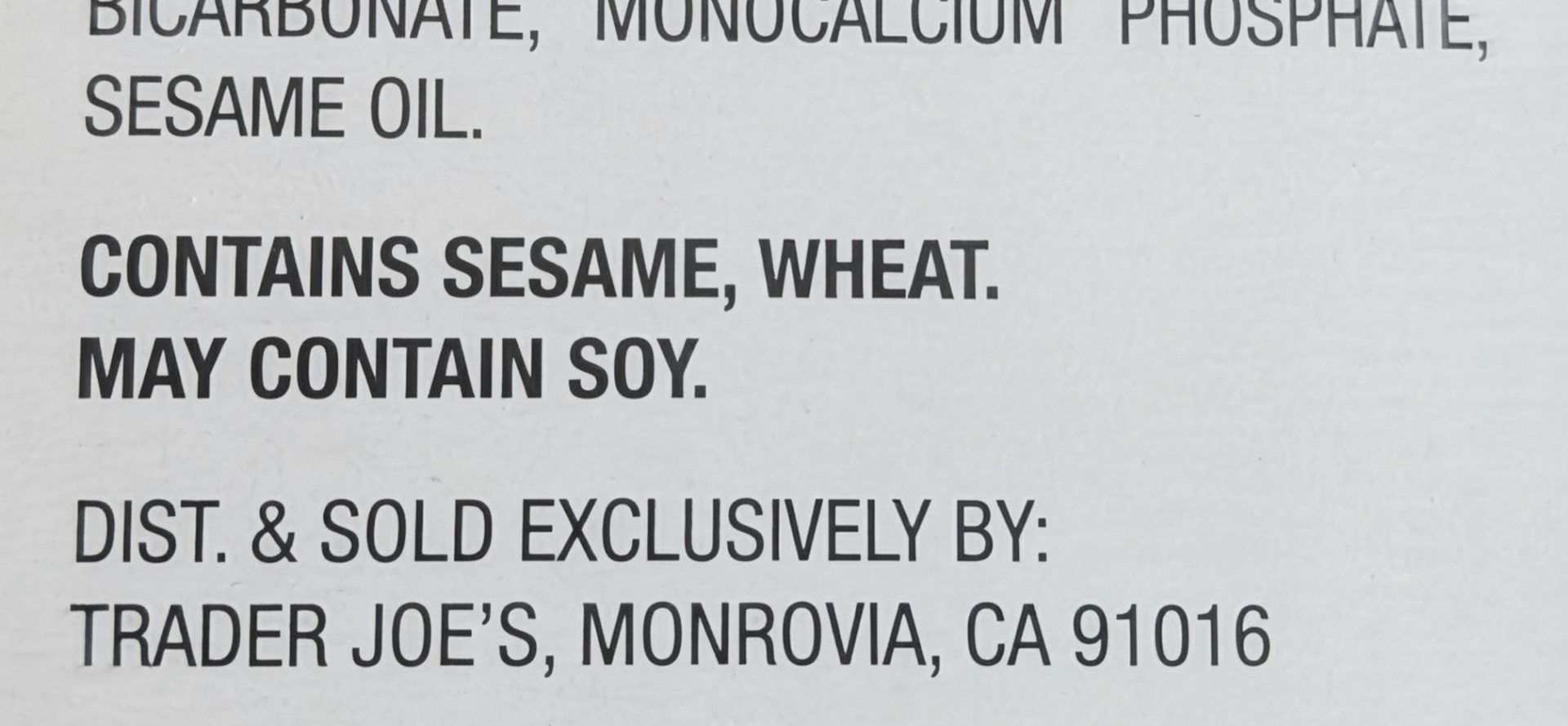
What does 'may contain' mean? Food allergy label guide.
"May contain" warnings are voluntary — and no warning doesn't mean a food is safe. What these labels really mean, and when to walk away.
A free printable PDF of every deceptive ingredient name that hides gluten — plus the safe lookalikes you can stop worrying about.

Pick what you avoid, add a menu, and see which dishes are safe, which to ask about, and which to skip.
What do you need to avoid?
One free check per visitor. No email needed to see your first results.
A new Celiac diagnosis comes with a crash course in food science. Wheat is easy: US labeling law forces it into the allergen box. Everything else is where people get glutened — barley malt in a breakfast cereal, wheat starch binding imitation crab, a roux under a restaurant gravy, or a bottle of soy sauce that is roughly half fermented wheat.
Below is the full categorized reference. Download the printable PDF, keep it in your bag or on the fridge, and check any unfamiliar ingredient against it before it goes in your cart. Pair it with our hidden gluten grocery checklist and our guide to what "may contain" actually means.
The single biggest trap
Barley is not a top-9 US allergen. A product can be loaded with barley malt and still carry no allergen warning at all. Always read the full ingredient list, not just the “Contains” box.
These are direct species or hybrids of wheat. In some regions or culinary contexts, they may bypass generic “wheat” labeling assumptions.
Unlike wheat, barley is not a top-9 major allergen in the US, which means manufacturers do not have to put it in an allergen warning box. You have to read the ingredient list itself.
These terms are culinary preparations or food additives that almost always contain wheat or gluten unless explicitly certified gluten-free.
These can be derived from either gluten grains or safe alternatives such as corn, soy, tapioca, or potato. If the package is not labeled gluten-free, contact the manufacturer.
| Ingredient | Gluten risk | Safe alternatives |
|---|---|---|
| Modified food starch | Can be derived from wheat (must declare “wheat” in the US, but barley or rye sources may appear as generic starch in some imports). | Corn, potato, tapioca |
| Hydrolyzed vegetable / plant protein (HVP, HPP) | Frequently made from wheat or soy. | Soy, corn |
| Dextrin | Can be wheat-derived (requires a “wheat” label in the US, but check imported foods). | Corn, tapioca, potato |
| Caramel color | Rarely wheat-derived in North America, but possible in imported goods. | Corn-derived |
| Natural flavors | Can rarely include barley malt or wheat derivatives. | Non-grain or corn sources |
| Smoke flavoring | May use barley malt flour as a carrier. | Pure wood smoke extract |
| Oats / oat flour | Inherently gluten-free, but heavily cross-contaminated during harvest and milling. | Certified purity-protocol gluten-free oats |
These ingredients sound like wheat or gluten, but they are naturally gluten-free.
Eating out adds a second layer of aliases you never get to read. If you are heading to a chain restaurant, our gluten-free chain ordering guide covers what is actually safe to order at 20 popular spots.
Nobody should have to hold thirty synonyms for wheat in their head while standing in a grocery aisle. Keep the PDF for backup — and let your phone do the rest.
With Stuff I Can Eat, you can scan any label or menu and get an instant read against your exact dietary profile, including Celiac disease.
More practical guides to help you eat safely and confidently.
"May contain" warnings are voluntary — and no warning doesn't mean a food is safe. What these labels really mean, and when to walk away.

Scan a barcode or snap an ingredient label and see instantly whether a packaged food is safe for your allergies — a step-by-step walkthrough.
Decode complex packaging labels and avoid sneaky wheat, barley, and rye derivatives hiding in everyday grocery aisles.