
How to scan food labels and barcodes for allergens.
Scan a barcode or snap an ingredient label and see instantly whether a packaged food is safe for your allergies — a step-by-step walkthrough.
What those tiny italic warnings actually mean — and how to tell a real risk from legal cover.
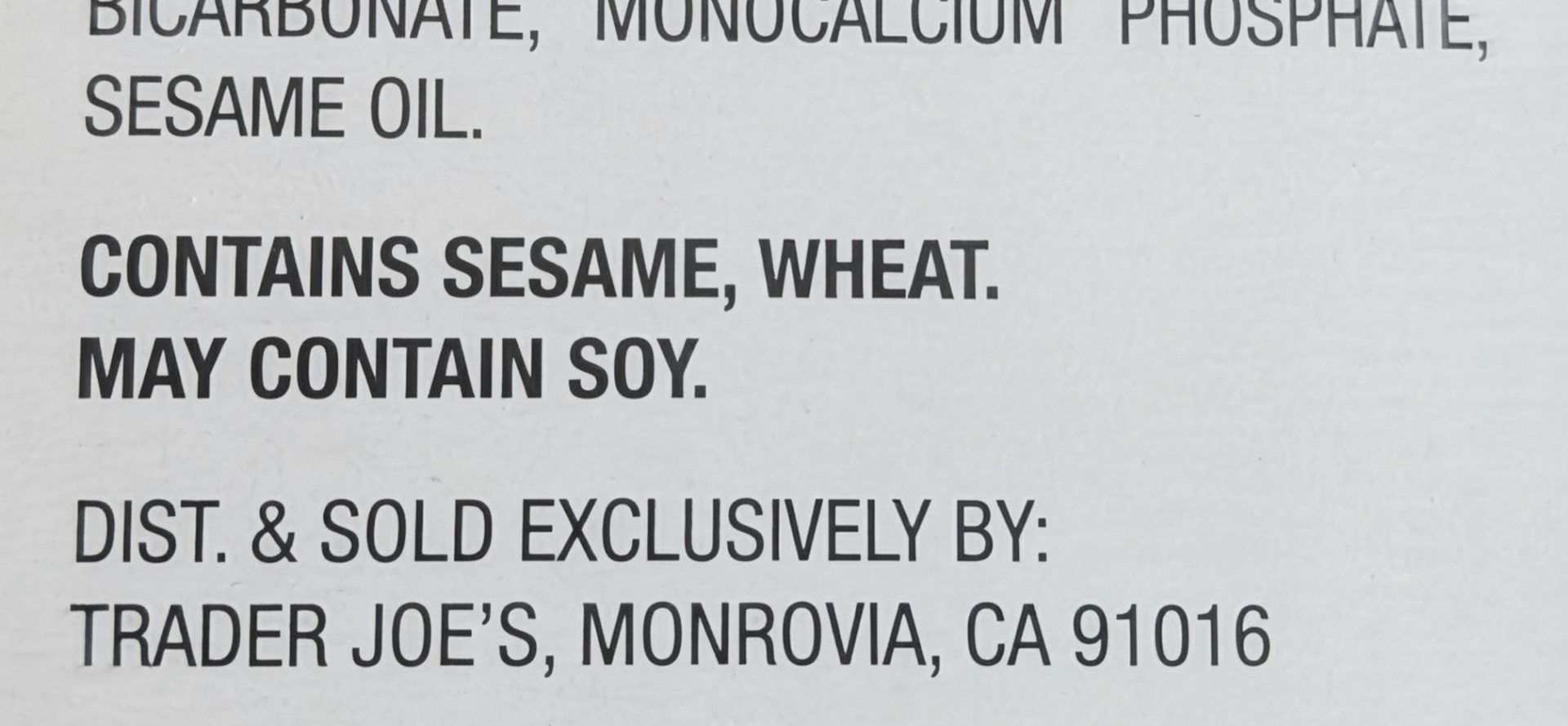
You are standing in the grocery aisle, holding a box of granola bars or cookies. You turn the package over to check the ingredient list, and everything looks completely safe. But right below the ingredients, in small italics, you read the dreaded phrase:
"May contain tree nuts."
Or perhaps: "Made on shared equipment with wheat and soy."
If you or a family member live with severe food allergies or Celiac disease, these statements — known formally as Precautionary Allergen Labeling (PAL) — are a constant source of frustration and anxiety. Does "may contain" mean there is an active trace of an allergen in the product, or is the manufacturer simply covering their legal liability? Should you put the item back on the shelf, or is it actually safe to eat?
This guide breaks down the science, the law, and the factory realities behind precautionary labeling so you can make informed, confident choices at the grocery store. If you are also decoding a specific product, check our guides on hidden gluten in grocery ingredients and hidden allergens in hot dogs.
To understand precautionary labels, you first need to understand how food labeling laws work in the United States under the Food Allergen Labeling and Consumer Protection Act (FALCPA) and the FASTER Act. These rules differ significantly abroad — see our comparison of global food allergen labeling laws.
By law, if a packaged food product contains any of the Top 9 major food allergens (milk, eggs, peanuts, tree nuts, wheat, soy, fish, crustacean shellfish, or sesame) as an intentional ingredient, it must be clearly declared on the label — either in the main ingredient list or in a clear "Contains" statement directly below it.
Statements like "May contain...", "Processed in a facility that also handles...", or "Made on shared equipment with..." are 100% voluntary.
The FDA does not mandate these warnings, nor does it regulate the specific phrasing manufacturers use. Furthermore, the presence — or absence — of a precautionary statement does not tell you the exact level of cross-contact risk present in that facility.
Shoppers often assume that different warnings reflect different levels of danger. For example, many believe that "May contain" implies a higher risk than "Processed in a facility."
In reality, food safety regulations do not assign different risk tiers to these phrases. A brand might choose one phrase over another simply based on packaging design preferences or corporate policy.
Here is what is actually happening behind the factory doors:
Used when an allergen is handled in the building and residual cross-contact could occur during production or packaging runs.
The product itself does not contain the allergen, but the exact same production line is used for items that do (typically separated by strict cleaning protocols).
The allergen is present somewhere in the manufacturing building (e.g., in a different room or separate line), but not necessarily on the same equipment.
Because all of these statements are voluntary, a product with no advisory label at all could actually be manufactured in a facility with higher cross-contact risks than a product that voluntarily includes a warning.
Why do food manufacturers use precautionary labels in the first place? In modern food processing facilities, ingredients move through complex networks of blenders, conveyor belts, baking ovens, and packaging lines. Cross-contact can occur in several ways:
Because precautionary labeling is unregulated, managing your risk requires a clear strategy developed alongside your healthcare provider — the same approach that helps when weighing a true food allergy against a food intolerance.
Different individuals have wildly different reaction thresholds. Some people with severe anaphylactic allergies must strictly avoid any product carrying a shared-facility statement, while others can safely consume products made on shared lines if stringent cleaning protocols are followed. Ask your allergist specifically how you should handle "may contain" labels based on your personal medical history.
If you are unsure about a staple brand, reach out to their consumer relations team. Reputable brands that take food safety seriously will transparently answer specific questions about:
Deciphering confusing packaging, tiny ingredient fonts, and vague warning statements can turn a simple grocery trip into an exhausting chore.
Let Stuff I Can Eat streamline your food safety checks. With your free account, you can evaluate packaged foods in seconds:
Stop second-guessing the label. Take control of your grocery cart with confidence.
More practical guides to help you eat safely and confidently.
Scan a barcode or snap an ingredient label and see instantly whether a packaged food is safe for your allergies — a step-by-step walkthrough.

A free printable list of every deceptive ingredient name that hides gluten — wheat aliases, barley malt traps, red-flag additives, and safe lookalikes.
Decode complex packaging labels and avoid sneaky wheat, barley, and rye derivatives hiding in everyday grocery aisles.