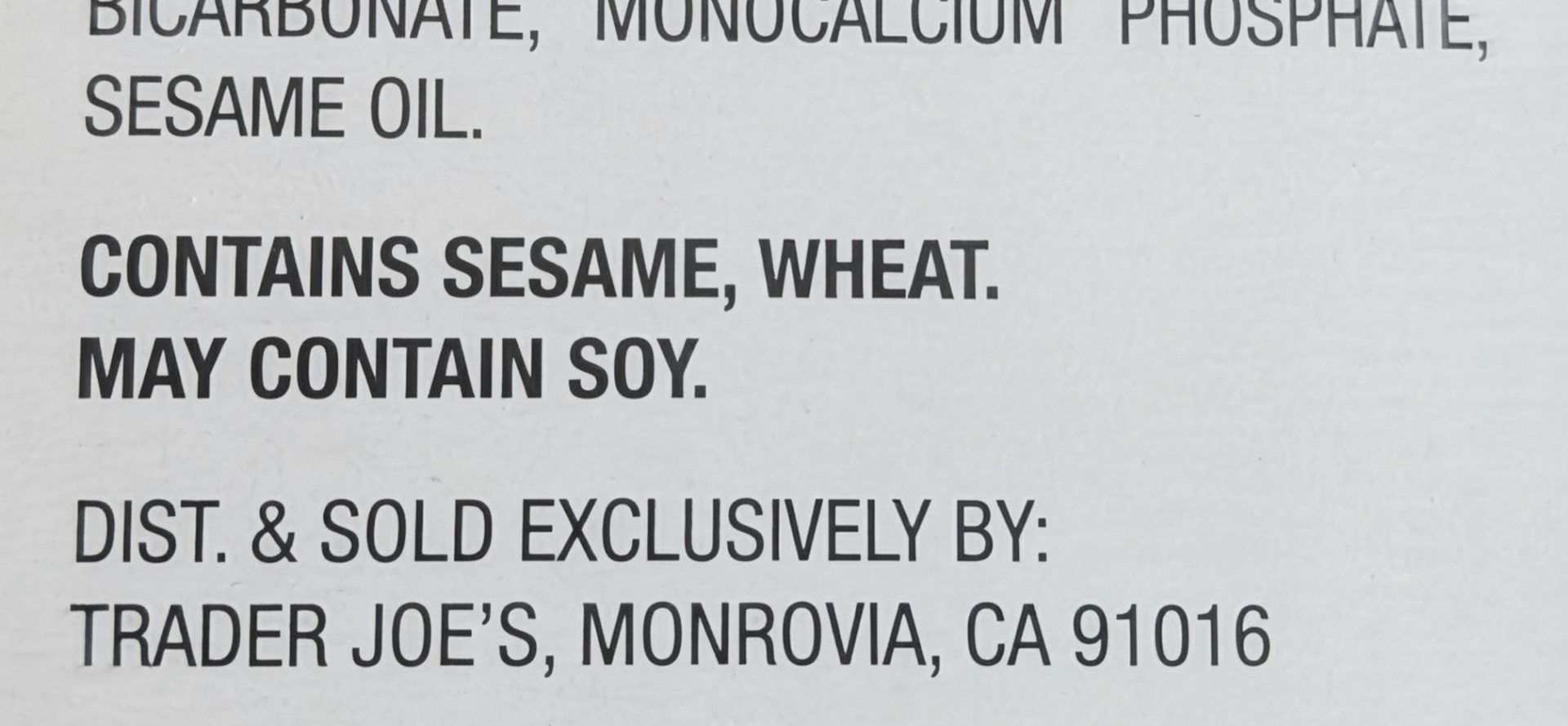
What does 'may contain' mean? Food allergy label guide.
"May contain" warnings are voluntary — and no warning doesn't mean a food is safe. What these labels really mean, and when to walk away.
Direct answers on rice, soy, oats, polenta, modified food starch, angel food cake, and the sneaky hidden additives that trip people up.
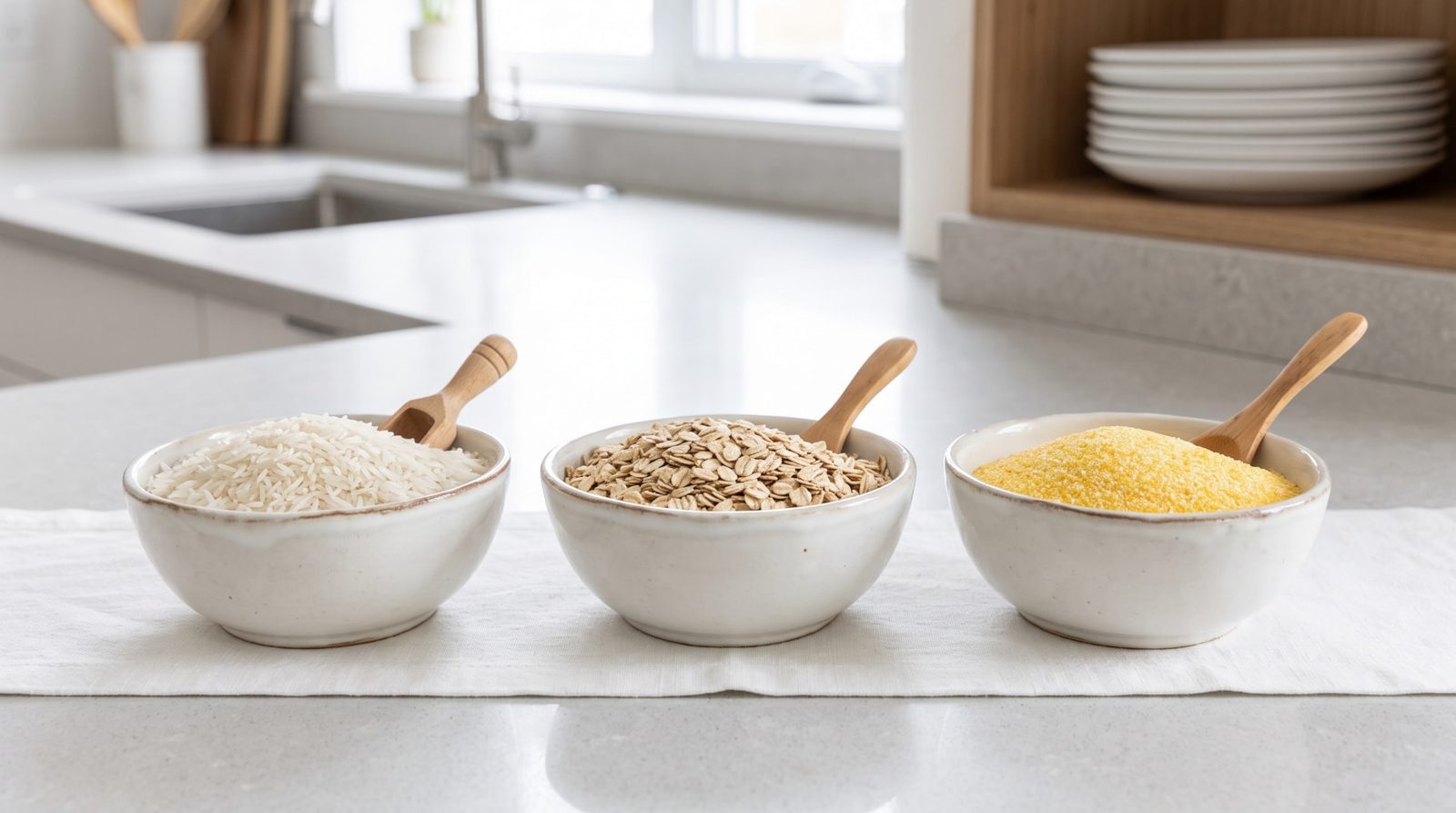
When beginning a gluten-free diet — whether due to Celiac disease, a wheat allergy, or non-celiac gluten sensitivity — one of the biggest challenges isn't avoiding obvious wheat products like sandwich bread or regular pasta. The real headache comes from the gray areas.
Can you eat rice? Is soy naturally gluten-free? Why is angel food cake unsafe if it's mostly whipped egg whites? And what on earth is "modified food starch" doing on a label?
Below is a direct, no-nonsense reference guide answering the most commonly searched questions about what is — and isn't — gluten-free. For a printable companion, see our hidden gluten ingredient reference.
In their whole, unseasoned, and unprocessed forms, several entire food categories contain zero gluten proteins (gluten is found exclusively in wheat, barley, rye, and triticale):
The risk in these categories almost never comes from the food itself — it comes from added seasonings, marinades, breading, or processing line cross-contact.
Yes, all pure rice is naturally gluten-free. This includes white rice, brown rice, basmati, jasmine, wild rice, and arborio. Even "glutinous rice" (sticky rice used in Asian desserts and sushi) is completely gluten-free; the name refers to its sticky, glue-like texture caused by high amylopectin starch, not dietary gluten.
Watch out for
Pre-packaged seasoned rice mixes (like pilaf), which frequently use wheat flour thickeners or hydrolyzed wheat protein in their seasoning packets.
Yes, traditional polenta is gluten-free. Polenta is made simply from coarsely ground yellow cornmeal. Because corn is botanically distinct from wheat, pure cornmeal and polenta are safe.
Watch out for
Restaurant polenta finished with shared kitchen tools, or packaged instant polenta processed in facilities alongside semolina or wheat flour. Always look for a certified gluten-free label.
Yes, pure oats are naturally gluten-free — BUT they carry the highest cross-contact risk of any grain. Oats are commonly grown in crop rotation with wheat and processed on shared milling equipment. Furthermore, a small percentage of people with Celiac disease react to avenin, the protein in oats.
Rule of thumb
Diners with Celiac disease or wheat allergies should only consume oats labeled "Certified Gluten-Free."
Yes, 100%. Quinoa is technically a pseudo-cereal seed related to spinach and beets. It contains no gluten proteins and provides a nutrient-dense, high-protein alternative to wheat grains.
Yes, despite having "wheat" in its name, buckwheat is completely gluten-free. Buckwheat is another pseudo-cereal seed (related to rhubarb). Pure 100% buckwheat flour, groats (kasha), and traditional 100% buckwheat soba noodles are safe.
Watch out for
Commercial soba noodles, which often blend buckwheat with 20% to 50% standard wheat flour to improve elasticity.
Yes, whole soybeans and pure soy products are naturally gluten-free. Edamame, raw soybeans, pure soy milk, and traditional plain tofu (curdled soy milk) contain no gluten.
While soybeans are gluten-free, traditional brewed soy sauce is NOT gluten-free. Authentic soy sauce is brewed using roughly equal parts soybeans and crushed wheat. If a dish contains standard soy sauce, it contains wheat gluten — a key risk when ordering Chinese food and other soy-heavy cuisines.
The safe fix
Look for tamari (a Japanese soy sauce traditionally brewed with 100% soybeans and no wheat) or bottles clearly marked "Gluten-Free Soy Sauce."
No, traditional angel food cake is NOT gluten-free. Because angel food cake is prized for its airy, cloud-like texture and consists largely of whipped egg whites and sugar, many assume it is flourless. However, classic recipes fold in standard wheat cake flour to give the whipped egg whites structure. Unless specifically baked using certified gluten-free flour blends (such as rice flour or potato starch), angel food cake is unsafe.
Typically yes, but verify the filling. Traditional French macarons are made from whipped egg whites, sugar, and almond flour, making the cookie shells naturally gluten-free.
Watch out for
Specialty fillings that incorporate cookie crumbs (like Oreo or speculoos) or malt flavorings. Nut-based shells also matter if you're managing tree nut allergies.
When reading packaged ingredient decks, obscure additive names frequently cause panic. Here is how to evaluate the most common ones. (Imported items may follow different labeling standards abroad.)
In North America, almost always yes. Under FDA regulations in the United States, if modified food starch is derived from wheat, the word "wheat" must appear on the label (e.g., "modified wheat starch" or listed under the "Contains: Wheat" alert). If the ingredient simply states "modified food starch," it is derived from corn, waxy maize, potato, or tapioca, and is gluten-free. If buying imported packaged goods from Europe or Asia, always verify sourcing, as wheat starch derivation is more common abroad.
Yes. In the US, maltodextrin is almost exclusively produced from corn, rice, or potato starch. Even when derived from wheat in European products, the chemical hydrolysis process purifies the starch to such a degree that it falls well below the 20 ppm FDA gluten-free threshold.
It depends on the type:
Tired of memorizing starch derivatives or wondering whether a restaurant's sauce contains hidden wheat? Skip the guesswork before you take a bite.
With Stuff I Can Eat, checking your meals is fast, accurate, and completely mobile-first:
Modified starches, brewer's yeast, and wheat-brewed soy sauce hide gluten in everyday foods — and recipes change without warning.
With Stuff I Can Eat, you can scan grocery labels, check restaurant menus, and carry a digital allergy card everywhere you eat.
More practical guides to help you eat safely and confidently.
"May contain" warnings are voluntary — and no warning doesn't mean a food is safe. What these labels really mean, and when to walk away.
Scan a barcode or snap an ingredient label and see instantly whether a packaged food is safe for your allergies — a step-by-step walkthrough.
A free printable list of every deceptive ingredient name that hides gluten — wheat aliases, barley malt traps, red-flag additives, and safe lookalikes.